Semaglutide vs.Tirzepatide
Understanding the Differences in GLP-1 Medications
Revi ewed by: Doctor Robert Perkins, MD
Written by: Kristin Rippel | Mar 9, 2026 | Last updated Mar 9, 2026
 Navigating the Nuances of GLP-1 and GIP Agonists
In the realm of weight management and type 2 diabetes treatment, two prominent medications, Semaglutide and Tirzepatide, have garnered significant attention. Both belong to the class of GLP-1 receptor agonists, but they possess distinct mechanisms of action that contribute to varying levels of efficacy and potential side effects. Understanding these differences is crucial for individuals considering these treatments and for healthcare providers guiding their patients.
Semaglutide: A GLP-1 Receptor Agonist
Semaglutide, known by brand names such as Ozempic and Wegovy, functions as a GLP-1 receptor agonist. This means it mimics the natural glucagon-like peptide-1 hormone, which is produced in the gut. As discussed in our previous blog, GLP-1 plays a vital role in:
- Stimulating insulin release in a glucose-dependent manner.
- Suppressing glucagon secretion.
- Slowing gastric emptying.
- Reducing appetite and increasing satiety through its action on the brain .
These actions collectively lead to improved blood sugar control and significant weight loss.
Tirzepatide: A Dual GLP-1 and GIP Receptor Agonist
Tirzepatide, marketed as Mounjaro and Zepbound, takes a unique approach by acting as a dual agonist for both GLP-1 and Glucose-dependent Insulinotropic Polypeptide (GIP) receptors. GIP is another incretin hormone that, like GLP-1, is released after food intake and contributes to insulin secretion and feelings of fullness .
By targeting both GLP-1 and GIP pathways, Tirzepatide offers a more comprehensive approach to metabolic regulation and weight management. This dual action is believed to contribute to its enhanced efficacy compared to single GLP-1 agonists.
Key Differences and Efficacy
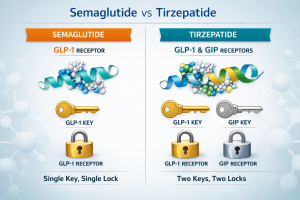
The primary distinction between Semaglutide and Tirzepatide lies in their receptor targeting. Semaglutide activates only the GLP-1 receptor, while Tirzepatide activates both GLP-1 and GIP receptors. This difference translates into varying outcomes in clinical studies, particularly concerning weight loss.
Table 1: Comparison of Semaglutide and Tirzepatide
| Feature | Semaglutide (e.g., Wegovy, Ozempic) | Tirzepatide (e.g., Zepbound, Mounjaro) |
| Mechanism | GLP-1 Receptor Agonist | GLP-1 and GIP Receptor Agonist |
| Weight Loss | Significant | Generally higher |
| Clinical Trials | Up to 15-17% body weight reduction | Up to 20-22.5% body weight reduction |
| Side Effects | Nausea, vomiting, diarrhea, constipation | Similar, potentially slightly higher incidence of serious side effects at higher doses |
Clinical trials have consistently shown that Tirzepatide leads to a greater percentage of body weight reduction compared to Semaglutide. For instance, some studies have reported an average weight loss of 17.8% with Tirzepatide versus 12.4% with Semaglutide . This enhanced efficacy is attributed to the synergistic effects of activating both GLP-1 and GIP receptors.
Side Effects and Considerations
Both medications share a similar profile of common side effects, primarily gastrointestinal in nature, such as nausea, vomiting, diarrhea, and constipation. While generally well-tolerated, some studies have indicated a potentially slightly higher incidence of serious adverse events with Tirzepatide at higher doses .
It is important to note that the choice between Semaglutide and Tirzepatide should be made in consultation with a healthcare professional, considering individual health conditions, treatment goals, and potential risks. Both medications are powerful tools when used as part of a comprehensive weight management strategy that includes diet and exercise.
Conclusion
Both Semaglutide and Tirzepatide represent significant advancements in the treatment of obesity and type 2 diabetes. While Semaglutide effectively targets the GLP-1 pathway, Tirzepatide offers a dual-action approach by engaging both GLP-1 and GIP receptors, often resulting in greater weight loss. Understanding these distinctions empowers individuals to have informed discussions with their healthcare providers to determine the most suitable treatment path for their unique needs.
References
[2] Tirzepatide or semaglutide, weight loss drugs explained. (2024, July 25). Retrieved from
[3] Understanding the Differences Between Semaglutide and … (2024, June 10). Retrieved from
[4] Semaglutide vs Tirzepatide for Weight Loss. Retrieved from
Medical Disclaimer
*The information in this article is provided for educational purposes only and is not intended as medical advice, diagnosis, or treatment. Content written by Kristin Rippel and reviewed by Dr. Robert Perkins, MD should not replace guidance from a licensed healthcare professional.
Individuals should consult a qualified medical provider before starting, stopping, or changing any medication or treatment, including GLP-1 therapies.
NuBalance Health provides medical services through licensed healthcare professionals, and treatment decisions are made solely by those providers based on their clinical judgment.